24/7 Emergency Burst Pipe Winter Freeze Guide: Hydraulic Mechanics & Recovery Protocols
Winter freeze pipe bursts occur when expanding ice blocks domestic water lines, creating extreme hydraulic pressure that ruptures copper seams and PEX fittings. Certified water restoration contractors deploy truck-mounted extraction wands and commercial LGR dehumidifiers to stabilize flooded homes rapidly.
Understanding the thermodynamic science and procedural standards of water damage restoration empowers homeowners to make informed mitigation decisions. Our network connects callers with IICRC certified professionals equipped to handle complex drying projects.
Hydraulic Mechanics of Frozen Plumbing Line Ruptures
Contrary to popular belief, frozen water pipes do not rupture at the exact point of ice formation. As ice expands radially within uninsulated plumbing lines, it forms an immovable solid blockage that traps water between the ice plug and closed household plumbing fixtures downstream.
Downstream Hydraulic Pressure Spikes & Seam Fractures
Continued ice expansion compresses the trapped water column downstream, driving internal hydraulic pressures above two thousand pounds per square inch. This intense pressure exceeds the tensile strength of copper piping and soldered joints, causing catastrophic longitudinal splits along pipe walls.
Ruptures frequently occur inside unheated exterior walls and attics. Homeowners often discover leaks only after ambient temperatures rise and ice blockages thaw.
Vulnerabilities of Copper, PEX & CPVC in Cold Snaps
While flexible PEX tubing expands slightly during freezing conditions, brass crimp fittings and plastic elbows remain vulnerable to mechanical stress cracking. Rigid copper and brittle CPVC piping lack elasticity and fracture easily under severe winter sub-zero temperatures.
Uninsulated crawlspace supply lines and exterior hose bibbs represent primary failure points. Proper thermal pipe insulation prevents winter freeze emergencies.
Immediate Emergency Actions Following a Burst Pipe
A burst pressurized domestic water pipe can flood living spaces with hundreds of gallons of water within minutes. Homeowners must execute immediate emergency protocols to shut off the water supply, prevent electrical electrocution, and initiate professional water extraction.
Main Water Shutoff & System Depressurization Steps
Locating and closing the main interior water shutoff valve immediately halts uncontrolled water discharge into living areas. Opening lowest-level faucets and exterior hose bibbs relieves remaining hydraulic pressure within the home plumbing distribution system safely.
Property owners should tag main shutoff valves before winter begins. Fast valve shutoff prevents thousands of dollars in secondary structural damage.
Electrical Safety Precautions & Circuit Breaker Disconnects
Water flowing through ceiling assemblies and down wall cavities frequently saturates electrical junction boxes, light fixtures, and wall outlets. Homeowners must turn off circuit breakers powering flooded rooms before entering wet areas to avoid electrocution hazards.
If the main electrical panel is located in a flooded basement, do not enter standing water. Contact utility providers or professional restoration teams immediately.
Attic Pipe Bursts & Ceiling Drywall Collapse Hazards
Plumbing supply lines routed through unconditioned attic spaces pose extreme structural hazards when frozen pipes burst. High-volume leaks soak loose-fill fiberglass insulation, causing heavy waterlogged drywall ceilings to sag and collapse under water weight.
Controlled Drainage of Ceiling Water Pockets
When water accumulates above sheetrock ceilings, restoration specialists place heavy collection containers below sagging areas and pierce controlled weep holes. This targeted relief drains trapped water safely without triggering sudden catastrophic ceiling collapses.
Saturated acoustic tiles and crumbling drywall sections are safely removed. Controlled containment barriers prevent wet insulation debris from contaminating living rooms.
Saturated Insulation Removal & Cavity Sanitization
Wet fiberglass and cellulose attic insulation lose thermal resistance permanently and trap moisture against ceiling joists. Restoration crews vacuum wet insulation using commercial negative air hoses and apply antimicrobials to exposed framing timbers.
Removing wet insulation facilitates rapid psychrometric drying of ceiling joists. Clean framing lumber is dried to certified equilibrium standards before new insulation is installed.
Cavity Wall Drying & Infrared Thermal Moisture Tracing
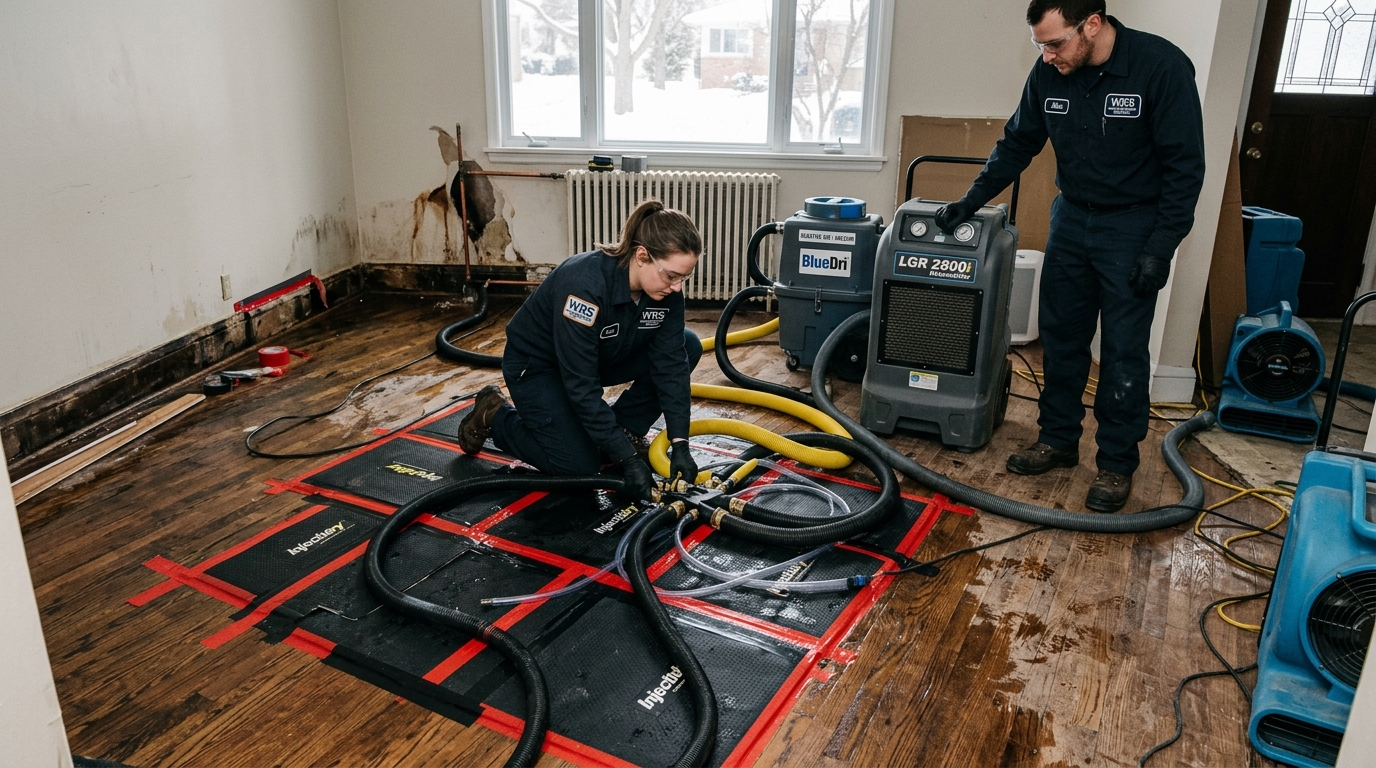
Water traveling downward from broken pipes pools inside vertical wall cavities and wicks into adjacent flooring assemblies. Certified technicians deploy non-destructive thermal imaging cameras and commercial injectidry panels to dry internal framing without tearing down intact sheetrock.
Infrared Thermography for Hidden Water Mapping
Thermal imaging cameras detect subtle temperature differentials caused by evaporative cooling where water is trapped inside wall cavities. Technicians map the precise boundaries of moisture migration across multiple home levels without destructive exploratory wall cuts.
Infrared scans provide verifiable evidence for property insurance claims. Color thermal images confirm the exact scope of emergency water mitigation.
Targeted Wall Cavity Injectidry Air Circulation
Specialized injectidry systems force pressurized dry heated air through small exploratory ports drilled behind decorative baseboard trim. Dry air circulates through wet stud bays, evaporating moisture rapidly while keeping wallboard surfaces intact.
Baseboards are reinstalled neatly once structural studs achieve certified dry standards. Homeowners avoid expensive, disruptive drywall reconstruction.
Frequently Asked Questions About Burst Pipe Winter Freeze Guide: Hydraulic Mechanics & Recovery Protocols
Review authoritative answers to common homeowner questions regarding restoration equipment, psychrometric calculations, IICRC standards, and insurance claim coverage.
Water expands by approximately 9 percent when freezing into ice. As ice blocks pipe flow, hydraulic pressure builds down...
Water expands by approximately 9 percent when freezing into ice. As ice blocks pipe flow, hydraulic pressure builds downstream between the ice and closed fixtures, splitting copper and PEX lines violently.
Shut off the main water valve immediately to stop the water flow. Turn off electrical breakers powering flooded rooms, o...
Shut off the main water valve immediately to stop the water flow. Turn off electrical breakers powering flooded rooms, open faucets to drain pressure, and contact an emergency water restoration contractor.
Most homeowner insurance policies cover sudden and accidental burst pipe water damage, provided the homeowner maintained...
Most homeowner insurance policies cover sudden and accidental burst pipe water damage, provided the homeowner maintained reasonable heat in the building. Contractors provide documented moisture logs for adjusters.
Keep indoor thermostats set to at least 55 degrees Fahrenheit, insulate exposed pipes in attics and crawlspaces, allow f...
Keep indoor thermostats set to at least 55 degrees Fahrenheit, insulate exposed pipes in attics and crawlspaces, allow faucets to drip slightly during extreme cold snaps, and open under-sink cabinet doors.
Call our 24/7 emergency referral hotline now to check on-call restoration capacity in your local municipal area.
📞 CALL (855) 716-3231