24/7 Emergency Water Damage Categories 1, 2, and 3: Contamination Standards & Safety
Water damage is classified under ANSI/IICRC S500 into Category 1 clean water, Category 2 grey water, and Category 3 black water based on biological and chemical purity. Classifying water contamination dictates required personal protective equipment, sanitization protocols, and necessary structural demolition for occupant safety.
Understanding the thermodynamic science and procedural standards of water damage restoration empowers homeowners to make informed mitigation decisions. Our network connects callers with IICRC certified professionals equipped to handle complex drying projects.
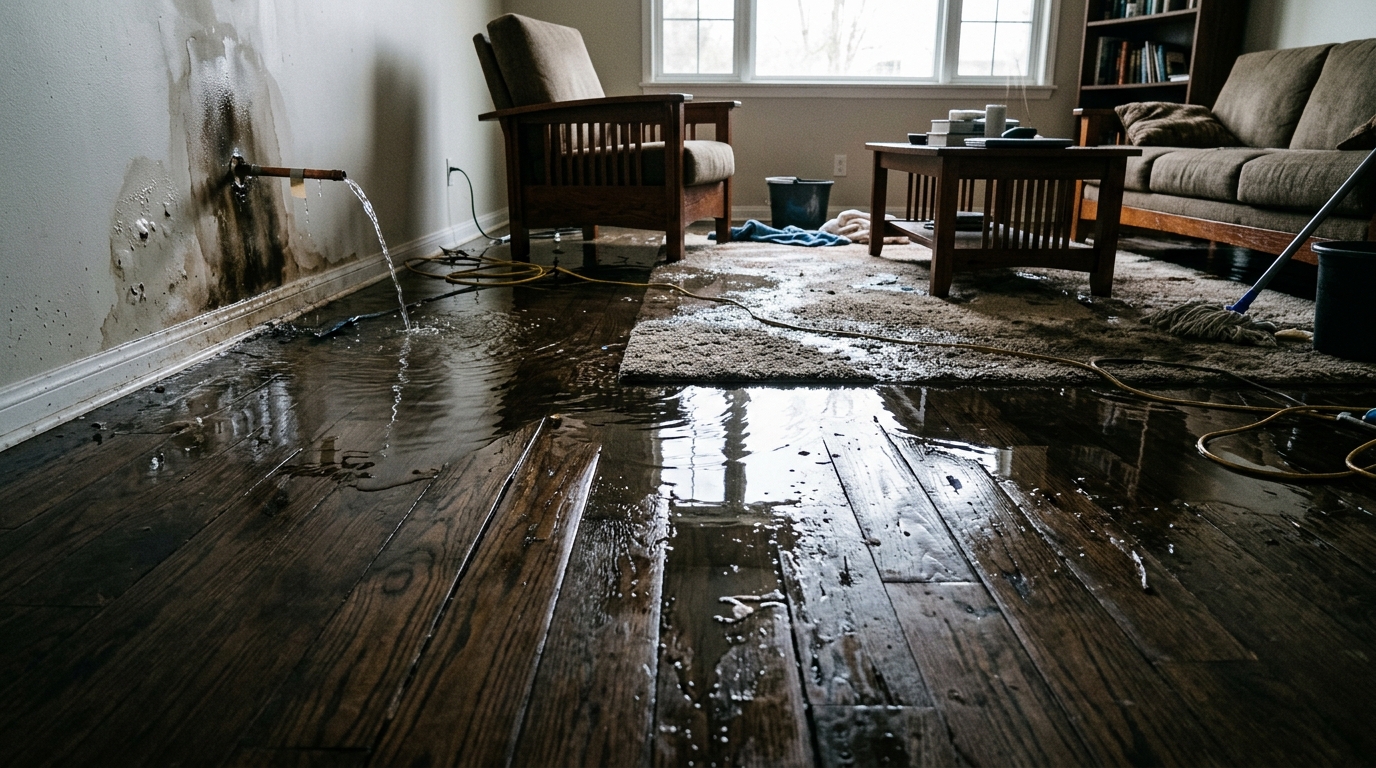
Category 1 Clean Water: Sources, Salvage & Time Limits
Category 1 water originates from sanitary sources that pose no initial threat to human health upon release. Broken copper supply pipes, melting snow, and clean sink overflows allow technicians to salvage expensive structural hardwood flooring and carpet assemblies through rapid mechanical extraction.
Common Sanitary Water Loss Sources in Homes
Typical Category 1 clean water events stem from ruptured domestic water supply lines, failing water heater tanks, toilet supply line splits before entering the bowl, and appliance supply connections. Because the water contains no biological pathogens initially, physical building demolition is minimal.
Fast extraction preserves expensive building finishes when initiated promptly. Immediate intervention prevents structural water wicking into adjacent dry rooms.
The 24 to 48-Hour Stagnation Threshold
Category 1 clean water remains sanitary for a limited duration. Once clean water contacts organic building dirt, floor finishes, and dust residues, ambient warmth and microbial incubation transform clean water into contaminated Category 2 grey water within twenty-four to forty-eight hours.
Delaying extraction past forty-eight hours invites rapid bacterial growth. Homeowners must mobilize on-call restoration contractors immediately upon discovering leaks.
Category 2 Grey Water: Chemical Residues & Fungal Risks
Category 2 water contains significant chemical or biological contamination capable of causing discomfort or sickness if ingested or inhaled. Washing machine discharge, dishwasher line leaks, and sump pump overflows require antimicrobial sanitization and the disposal of saturated porous padding.
Appliance Discharge, Sump Overflows & Detergent Residues
Water expelled from residential laundry machines, dishwashers, and aquarium tanks contains chemical surfactants, food soils, and organic micro-particulates. Technicians apply EPA-registered antimicrobials to concrete subfloors and wall framing before installing industrial drying equipment.
Contaminated foam carpet padding acts as an unhygienic sponge and must be safely discarded. Non-porous floor assemblies receive thorough chemical scrubbing.
Rapid Degradation into Category 3 Black Water
Stagnant grey water provides rich nutrient sources that accelerate bacterial colony division and fungal spore germination. Within forty-eight hours of warm standing exposure, Category 2 grey water degrades into hazardous Category 3 black water requiring full biohazard containment.
Prompt physical extraction arrests bacterial multiplication. Technicians monitor structural moisture to ensure complete biological decontamination.
Category 3 Black Water: Severe Biohazards & Sewage Ingress
Category 3 water is grossly contaminated with human waste, river silt, agricultural chemicals, and lethal pathogenic microorganisms. Municipal sewer line backups, toilet bowl overflows with feces, and overland storm surge floods require certified biohazard remediation and strict personal protection.
Pathogenic Bacteria, Viruses & Toxic Gases
Black water contains dangerous bacterial strains including Escherichia coli and Salmonella alongside norovirus and Hepatitis A. Saturated building cavities trap toxic hydrogen sulfide sewer gas, creating immediate respiratory hazards that mandate prompt occupant evacuation.
Technicians establish negative air containment chambers equipped with medical-grade HEPA filters. Airborne contaminants are safely evacuated to the building exterior.
Mandatory Disposal of Saturated Porous Materials
Under IICRC S500 guidelines, porous building materials submerged in Category 3 water cannot be effectively sanitized and must be discarded. Technicians remove soaked carpets, cushion padding, laminate flooring, and execute horizontal drywall flood cuts two feet above waterlines.
Contaminated debris is double-bagged and transported to authorized biohazard disposal facilities. Exposed structural lumber receives deep antimicrobial sanitization.
Safety Protocols & Contractor Certification Requirements
Remediating contaminated water damage requires specialized technical training and personal protective equipment compliant with OSHA safety standards. Independent restoration contractors adhere to strict procedural controls to safeguard building occupants and field personnel throughout project lifecycles.
Personal Protective Equipment (PPE) in Hazardous Zones
Field personnel operating in Category 2 and Category 3 contamination zones wear full personal protective equipment including OSHA-rated Tyvek suits, nitrile chemical gloves, waterproof boots, and full-face respirators equipped with P100 particulate organic vapor filters.
Strict decontamination protocols prevent tracking pathogens into clean residential living spaces. Technicians maintain secure work zone barriers at all times.
Clearance Testing & Antimicrobial Application Protocols
Following mechanical silt removal and demolition, exposed structural studs and concrete slabs are scrubbed with broad-spectrum hospital-grade antimicrobials. ATP bioluminescence testing verifies bacterial eradication before psychrometric drying equipment is activated.
Certified sanitization guarantees a healthy indoor environment for subsequent rebuilding. Property owners receive written clearance documentation for insurance files.
Frequently Asked Questions About Water Damage Categories 1, 2, and 3: Contamination Standards & Safety
Review authoritative answers to common homeowner questions regarding restoration equipment, psychrometric calculations, IICRC standards, and insurance claim coverage.
Category 1 is clean sanitary water from broken pipes; Category 2 is grey water with chemicals or soap from appliances; C...
Category 1 is clean sanitary water from broken pipes; Category 2 is grey water with chemicals or soap from appliances; Category 3 is black water with sewage, river flooding, and dangerous biological pathogens.
Yes. Clean Category 1 water left untreated for more than 48 hours degrades into Category 2 and eventually Category 3 bla...
Yes. Clean Category 1 water left untreated for more than 48 hours degrades into Category 2 and eventually Category 3 black water as bacteria and mold colonies multiply in warm indoor environments.
No. Under IICRC S500 standards, porous carpet and padding exposed to Category 3 black water cannot be completely sanitiz...
No. Under IICRC S500 standards, porous carpet and padding exposed to Category 3 black water cannot be completely sanitized and must be safely removed and disposed of as biohazardous waste.
Restoration technicians entering black water zones must wear OSHA-compliant Tyvek suits, heavy nitrile chemical gloves, ...
Restoration technicians entering black water zones must wear OSHA-compliant Tyvek suits, heavy nitrile chemical gloves, rubber boots, and full-face respirators equipped with P100 organic vapor filters.
Call our 24/7 emergency referral hotline now to check on-call restoration capacity in your local municipal area.
📞 CALL (855) 716-3231