24/7 Emergency Sump Pump Failure & Basement Flood Guide: Hydrostatic Mitigation
Basement flooding from sump pump failure occurs when heavy rainfall saturates regional water tables, generating immense hydrostatic pressure against concrete foundation walls. Independent restoration contractors deploy submersible trash pumps and commercial LGR dehumidifiers to extract floodwater and sanitize basements.
Understanding the thermodynamic science and procedural standards of water damage restoration empowers homeowners to make informed mitigation decisions. Our network connects callers with IICRC certified professionals equipped to handle complex drying projects.
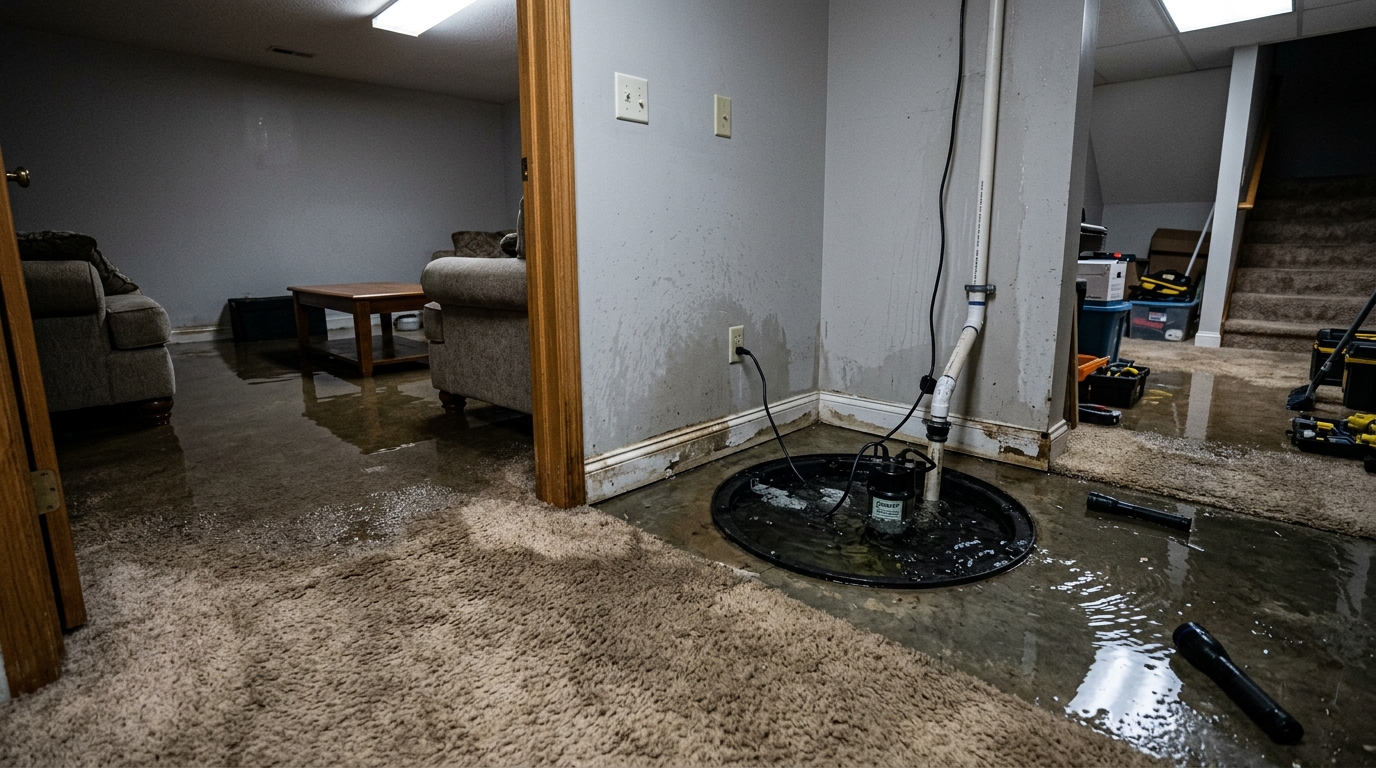
Hydrostatic Groundwater Pressure & Basement Vulnerabilities
Heavy rainfall and spring snowmelt saturate subterranean soil layers around residential foundations, creating intense hydrostatic pressure against basement walls and floor slabs. Sump pump systems collect perimeter drainage water to relieve this pressure and discharge it away from the home.
Water Table Saturation & Foundation Floor Seepage
When regional water tables rise above basement floor levels, hydrostatic pressure forces groundwater through hairline concrete cracks, floor joints, and porous masonry blocks. Without an operating sump pump, basements can accumulate multiple inches of floodwater within hours.
Unchecked hydrostatic pressure can crack structural foundation walls. Installing functioning interior French drains channels water to sump pits efficiently.
Common Mechanical Causes of Sump Pump Failure
Sump pump failures typically result from mechanical float switch sticking, electrical power outages during thunderstorms, motor burnout under continuous heavy pumping, and frozen exterior discharge lines in winter months.
Restoration specialists assist homeowners in identifying failure mechanisms. Installing dual-pump redundant systems prevents future basement flood disasters.
Emergency Submersible Extraction & Water Removal Protocols
Evacuating standing floodwater from basements requires high-capacity submersible trash pumps capable of handling solids, silt, and continuous pumping loads. Technicians route heavy discharge hoses away from the home foundation to prevent subterranean water recycling.
High-Volume Submersible Trash Pumps & Silt Evacuation
Deep standing floodwater exceeding two inches requires commercial submersible pumps equipped with vortex impellers. Technicians evacuate flooded basements efficiently, clearing water from finished carpets, drywall assemblies, and utility mechanical rooms.
High-capacity pumps discharge hundreds of gallons per minute. Electric and gas-powered units operate independently of residential electrical panel failures.
Weighted Drag Wands & Concrete Slab Moisture Extraction
Following bulk water evacuation, technicians deploy truck-mounted vacuum extraction units equipped with weighted drag wands. Intense suction removes residual surface water from porous concrete slab pores and carpet fibers before drying equipment is installed.
Deep vacuuming eliminates up to 90 percent of bound water. Proper extraction reduces overall structural drying times by several days.
Basement Sanitization & Category 2 Contamination Control
Groundwater entering basements carries dirt, organic fertilizers, and bacterial organisms classified as Category 2 grey water. Exposed concrete floors, framing studs, and storage items must undergo deep antimicrobial washing to prevent hazardous mold spore amplification.
Hospital-Grade Antimicrobial Washdowns & Scrubbing
Restoration specialists scrub concrete foundation slabs and wooden sill plates with EPA-registered botanical and quaternary ammonium disinfectants. High-pressure washdowns eliminate mineral salts and silt residues, neutralizing microbial spores thoroughly.
Antimicrobial barriers inhibit future mold growth on concrete and framing lumber. Formulations are completely safe for household occupants once dry.
Safe Disposal of Waterlogged Drywall & Porous Storage
Finished basement drywall and porous cardboard storage items saturated with ground floodwater absorb contaminants and rapidly cultivate toxic mold. Technicians execute clean horizontal flood cuts and bag saturated materials for safe disposal.
Exposing basement wall studs allows complete framing inspection and high-velocity drying. Proper demolition eliminates hidden mold reservoirs behind walls.
Permanent Redundancy: Dual Pumps & Battery Backup Guidance
Preventing recurring basement floods requires upgrading single sump pump setups with battery-powered backup units and secondary high-capacity pumps. Dual-pump configurations ensure uninterrupted foundation drainage even during extended utility blackout events.
Heavy-Duty Battery Backup Sump Systems
Severe thunderstorms that generate heavy rainfall frequently knock out municipal electrical power. Installing deep-cycle marine battery backup systems ensures secondary pumps activate automatically when primary AC power is lost, maintaining basement protection.
Battery backup systems operate for days on standby power. Modern smart monitoring systems send instant smartphone alerts upon pump activation.
Cast Iron Dual-Pump Alternating Controls
Commercial-grade dual-pump basins feature two heavy cast iron submersible pumps controlled by alternating float switches. If the primary pump experiences mechanical failure or excessive inflow, the secondary pump engages instantly to double pumping capacity.
Redundant pump systems provide comprehensive flood security for high-value finished basements. Technicians advise homeowners on proper pit sizing and discharge routing.
Frequently Asked Questions About Sump Pump Failure & Basement Flood Guide: Hydrostatic Mitigation
Review authoritative answers to common homeowner questions regarding restoration equipment, psychrometric calculations, IICRC standards, and insurance claim coverage.
The most common causes of sump pump failure are electrical power outages during storms, mechanical float switches gettin...
The most common causes of sump pump failure are electrical power outages during storms, mechanical float switches getting stuck against pit walls, and pump motor burnout under continuous heavy rainfall loads.
Sump pump floodwater is typically Category 2 grey water containing soil silt, lawn chemicals, and bacteria. If mixed wit...
Sump pump floodwater is typically Category 2 grey water containing soil silt, lawn chemicals, and bacteria. If mixed with sewer lines, it becomes Category 3 black water requiring professional biohazard remediation.
Standard homeowner insurance policies usually exclude sump pump failure unless the homeowner added an optional Water Bac...
Standard homeowner insurance policies usually exclude sump pump failure unless the homeowner added an optional Water Backup and Sump Discharge or Overflow endorsement to their policy.
Installing a heavy-duty battery backup sump pump system ensures continuous pumping protection when electrical power fail...
Installing a heavy-duty battery backup sump pump system ensures continuous pumping protection when electrical power fails during severe thunderstorms and hurricanes.
Call our 24/7 emergency referral hotline now to check on-call restoration capacity in your local municipal area.
📞 CALL (855) 716-3231