24/7 Emergency How Fast Does Mold Grow After a Water Pipe Burst?
Mold spores germinate and begin colonizing wet organic building materials within twenty-four to forty-eight hours following a water pipe burst or flood. Saturated drywall paper, carpet padding, and structural framing lumber provide ideal nutrient sources that accelerate rapid fungal amplification.
Our field restoration engineering network answers critical questions regarding emergency structural drying, insurance claim line items, and IICRC S500 procedural standards to assist homeowners facing indoor water crises.
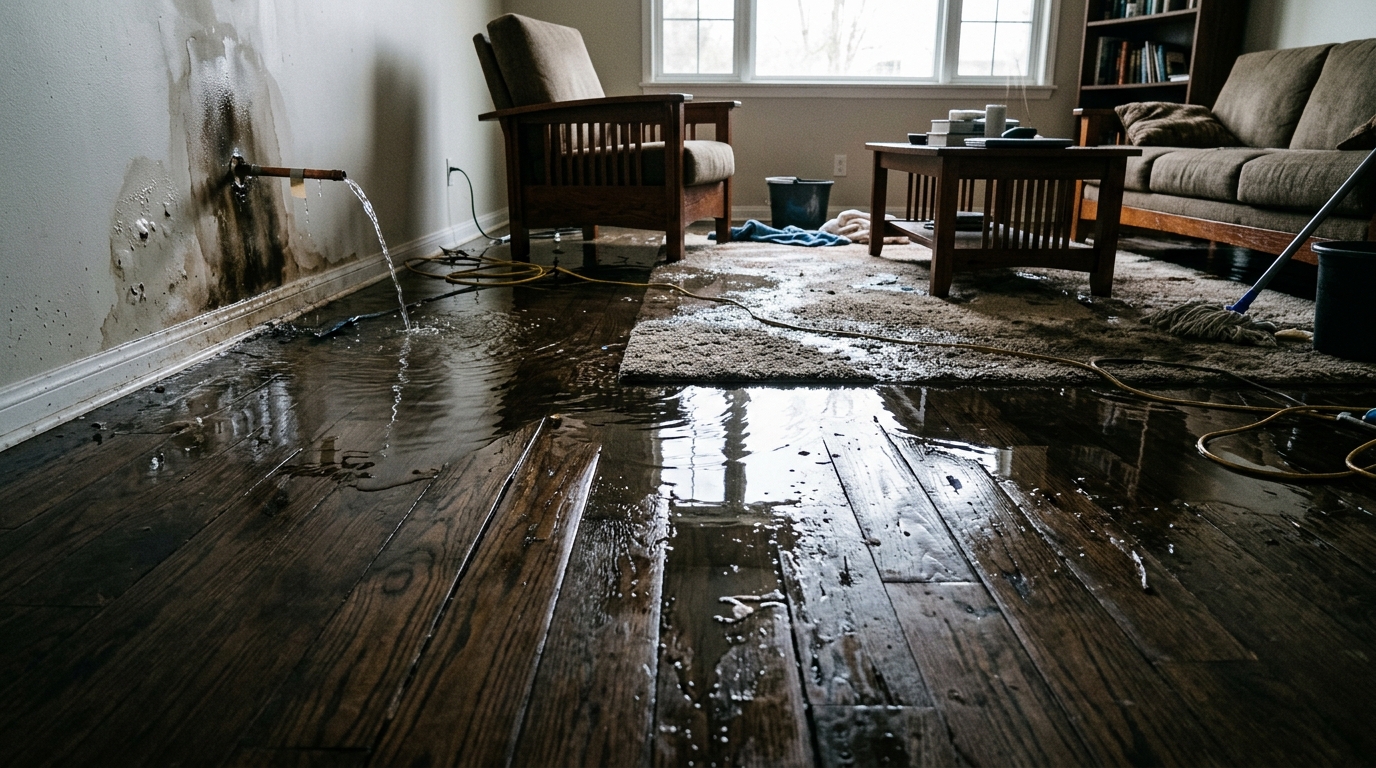
The 24 to 48-Hour Fungal Germination Window
Microscopic mold spores exist naturally in all indoor and outdoor ambient air, remaining dormant until moisture, warmth, and organic food sources align. A pressurized water pipe burst creates ideal conditions for immediate microbial spore germination.
Spore Hydration & Hyphae Growth Dynamics
When porous building materials absorb water, dormant fungal spores hydrate and send out microscopic root-like structures called hyphae within twenty-four hours. These hyphae release digestive enzymes that break down cellulose fibers in drywall paper and wood studs rapidly.
Initial microbial growth is invisible to the naked eye. However, active digestive colonization causes progressive structural deterioration inside dark wall cavities.
Microbial Volatile Organic Compounds (MVOCs) & Odors
As fungal colonies feed on wet cellulose, they release pungent microbial volatile organic compounds (MVOCs) into the surrounding air stream. These gaseous metabolic byproducts produce the characteristic musty odor that signals active hidden mold colonization.
Musty odors indicate that mold has already colonized building materials. Immediate physical water extraction and dehumidification are required to halt proliferation.
High-Risk Building Materials for Rapid Mold Proliferation
Not all construction assemblies cultivate fungal colonies at identical rates. Porous cellulose-rich building materials provide instant nourishment for mold spores, whereas non-porous masonry and metals resist initial microbial attachment.
Drywall Paper Backing & Saturated Fiberglass Insulation
Standard residential sheetrock consists of a gypsum core enveloped in recycled cellulose paper, which serves as a prime food source for Aspergillus and Stachybotrys mold strains. Saturated fiberglass batts trap moisture against drywall, creating persistent incubation chambers.
Wet drywall loses structural rigidity within forty-eight hours. Executing clean horizontal flood cuts eliminates wet drywall and stops mold outbreaks.
Carpet Padding & Subfloor Plywood Delamination
Foam carpet cushion acts like an unhygienic sponge that traps dirty water against porous plywood or OSB subflooring. Within seventy-two hours of moisture exposure, carpet backing separates and fungal mycelium spreads across entire room floor plans.
Contaminated carpet padding must be removed and discarded promptly. Concrete subfloors receive deep antimicrobial washing to neutralize fungal spores.
Health Hazards of Airborne Mycotoxins & Spore Inhalation
Unchecked mold colonization releases millions of microscopic spores and hazardous mycotoxins into residential indoor air streams. Inhaling these airborne toxins triggers severe allergic reactions, respiratory distress, and long-term immunological complications.
Respiratory Symptoms & Vulnerable Populations
Occupants exposed to active fungal amplification frequently suffer chronic nasal congestion, throat irritation, coughing, wheezing, and skin rashes. Individuals with asthma, infants, elderly adults, and immunocompromised family members face heightened risks of fungal infections.
Central HVAC air conditioning units can circulate spores across all home living areas. Turning off air handlers during water emergencies prevents whole-house spore dispersion.
Stachybotrys Chartarum (Toxic Black Mold) Mechanics
Stachybotrys chartarum is a slow-growing greenish-black mold strain that thrives on materials with high cellulose and continuous low-nitrogen water saturation. This fungus produces dangerous trichothecene mycotoxins capable of causing systemic inflammation and neurological symptoms.
Stachybotrys requires continuous wet conditions for eight to twelve days to establish dominant colonies. Rapid 48-hour water extraction stops toxic black mold entirely.
How Immediate Water Extraction Halts Mold Proliferation
The single most effective defense against post-flood mold colonization is rapid physical water extraction followed by industrial psychrometric drying. Lowering ambient relative humidity below fifty percent halts fungal spore division instantly.
Truck-Mounted Extraction & Moisture Deprivation
High-capacity extraction wands vacuum standing water from carpets, subflooring, and concrete slabs before moisture can incubate dormant spores. Depriving fungi of liquid water arrests hyphae extension and stabilizes the indoor building environment.
Mechanical extraction removes over 90 percent of bound water. Rapid water removal limits subsequent structural drying duration significantly.
Hospital-Grade Antimicrobial Sanitization Washdowns
Restoration specialists apply EPA-registered botanical and quaternary ammonium antimicrobials to structural wood studs and subfloors. These broad-spectrum sanitizers neutralize remaining spores and leave a residual barrier that inhibits future fungal growth.
Antimicrobial application guarantees a safe, healthy foundation for home recovery. Certified technicians verify complete structural dryness before rebuilding.
Frequently Asked Questions: How Fast Does Mold Grow After a Water Pipe Burst?
Review authoritative answers to common homeowner questions regarding restoration timelines, equipment operation, and insurance documentation.
Mold spores germinate and begin colonizing wet organic materials like drywall paper and carpet padding within 24 to 48 h...
Mold spores germinate and begin colonizing wet organic materials like drywall paper and carpet padding within 24 to 48 hours following a plumbing pipe rupture.
No. Initial microscopic fungal hyphae growth is invisible to the naked eye. Visible mold colonies, staining, and musty o...
No. Initial microscopic fungal hyphae growth is invisible to the naked eye. Visible mold colonies, staining, and musty odors typically become noticeable after 48 to 72 hours.
After 72 hours of unmitigated standing water, clean Category 1 water degrades into Category 3 black water contaminated w...
After 72 hours of unmitigated standing water, clean Category 1 water degrades into Category 3 black water contaminated with mold colonies, bacteria, and disintegrating drywall.
Yes. Commercial LGR dehumidifiers lower indoor relative humidity below 50 percent, depriving mold spores of the atmosphe...
Yes. Commercial LGR dehumidifiers lower indoor relative humidity below 50 percent, depriving mold spores of the atmospheric moisture required to germinate and reproduce.
Call our 24/7 emergency referral hotline now to check on-call restoration capacity in your local municipal area.
📞 CALL (855) 716-3231