24/7 Emergency How Long Does Structural Drying Take After an Indoor Flood?
Structural drying takes between three and five days for standard residential building assemblies under IICRC S500 psychrometric drying protocols. Trapped moisture within dense concrete foundations, plaster walls, or subflooring may require five to seven days verified by daily pin moisture meter inspections.
Our field restoration engineering network answers critical questions regarding emergency structural drying, insurance claim line items, and IICRC S500 procedural standards to assist homeowners facing indoor water crises.
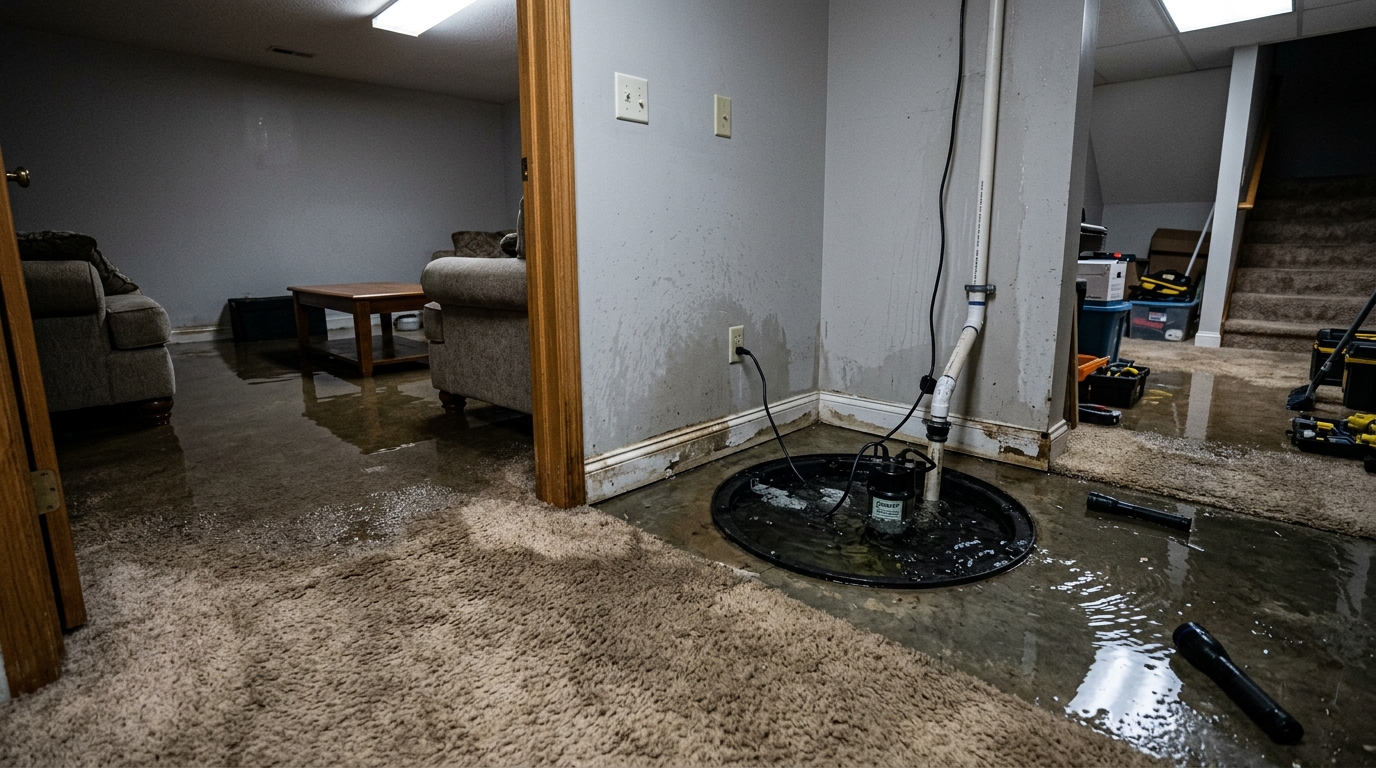
Standard Structural Psychrometric Drying Timelines
Professional water damage restoration does not end when standing water is vacuumed from finished floors. Structural drying requires continuous mechanical manipulation of vapor pressure to draw deeply bound water out of framing lumber, subfloor plywood, and concrete slabs.
The 72-Hour Rapid Stabilization Phase
The initial three days of structural drying represent the critical stabilization window where commercial LGR dehumidifiers and high-velocity air movers extract the vast majority of evaporated water. Lowering ambient relative humidity below forty percent prevents secondary mold amplification.
Technicians record daily moisture percentages across affected materials. If drying equipment is shut off prematurely, trapped moisture rebounds rapidly.
Variables Extending Drying Beyond Five Days
Dense construction materials including multi-layered subflooring, hardwood flooring, plaster walls, and thick concrete foundation slabs require extended drying times. Water migrating beneath concrete footings creates long-term vapor reservoirs that take five to seven days to dry.
Specialized injectidry floor mats accelerate dense hardwood drying. Daily thermal scans verify that subfloor moisture decreases steadily.
Why Commercial Equipment Must Run Continuously 24/7
Property owners frequently wonder whether loud drying machinery can be deactivated overnight. Turning off commercial dehumidifiers or axial air movers disrupts the established vapor pressure differential and causes indoor humidity to spike instantly.
Preventing Ambient Relative Humidity Rebounds
When drying equipment is powered down, bound moisture remaining inside framing studs evaporates into room air without being condensed. Ambient relative humidity rapidly rebounds above sixty-five percent, creating ideal warm microclimates for toxic mold spores to colonize drywall within hours.
Continuous twenty-four-hour equipment operation maintains a constant vapor pressure gradient. Uninterrupted drying shortens total restoration project duration.
Automatic Condensate Drainage & Thermal Protection
Commercial LGR dehumidifiers feature internal purge pumps that discharge extracted water through flexible tubing directly into plumbing fixtures. Built-in thermal overload switches protect compressor motors from overheating during continuous multi-day operation.
Technicians inspect equipment daily to verify clear drainage lines. Homeowners do not need to empty water reservoirs manually.
How Certified Technicians Verify That Building Assemblies Are Dry
Structural drying is never declared complete based on visual appearance or surface touch. Certified restoration specialists utilize electronic testing instruments to confirm that structural moisture content matches documented baseline reference standards.
Calibrated Electrical Resistance Pin Meters
Technicians insert insulated electrode pins into structural wall studs, bottom plates, and subfloor plywood to measure electrical resistance. Calibrated meters convert resistance into exact moisture percentages compared against dry baseline wood.
Wood framing lumber must achieve moisture content below sixteen percent before drying is complete. Readings above sixteen percent support active fungal colonization.
FLIR Thermal Imaging & Non-Invasive Scanners
Infrared thermography visualizes evaporative cooling patterns across finished drywall ceilings and tiled surfaces. Non-invasive radio frequency scanners verify sub-surface moisture levels without puncturing decorative ceramic tiles or historic hardwood planks.
Technicians document thermal images on completion certificates. Certified records provide conclusive proof of structural dryness for insurance adjusters.
Risks of Premature Equipment Removal & Trapped Moisture
Removing restoration equipment before building materials achieve certified dry equilibrium leaves trapped moisture pockets sealed inside wall cavities. Trapped moisture leads to progressive structural rot, buckled floorboards, and hidden toxic mold outbreaks.
Hardwood Floor Warping & Crown Deformations
Solid hardwood floor planks absorb trapped subfloor moisture unevenly, causing plank edges to cup upward or center cores to crown permanently. Allowing equipment to run until subfloors achieve dry standards preserves hardwood flooring without replacement.
Premature equipment shutdown locks moisture into subflooring. Hardwood planks become irreversibly deformed, requiring expensive flooring replacement.
Concealed Wall Cavity Mold Colonization
Wet insulation and damp framing lumber sealed behind intact drywall provide dark, warm, and humid environments where mold colonies thrive undetected. Airborne fungal spores eventually penetrate living spaces, triggering respiratory distress for household occupants.
Proper structural drying eliminates moisture before mold can colonize. Certified restoration contractors protect property value and family health.
Frequently Asked Questions: How Long Does Structural Drying Take After an Indoor Flood?
Review authoritative answers to common homeowner questions regarding restoration timelines, equipment operation, and insurance documentation.
Under standard IICRC S500 psychrometric drying protocols, standard drywall and framing lumber take 3 to 5 days to dry. D...
Under standard IICRC S500 psychrometric drying protocols, standard drywall and framing lumber take 3 to 5 days to dry. Dense materials like concrete or hardwood may take 5 to 7 days.
No. Drying equipment must run continuously 24 hours a day. Turning off equipment allows relative humidity to rebound, wh...
No. Drying equipment must run continuously 24 hours a day. Turning off equipment allows relative humidity to rebound, which prolongs drying times and risks toxic mold growth.
Technicians measure moisture levels daily using calibrated pin meters and infrared cameras, comparing readings against u...
Technicians measure moisture levels daily using calibrated pin meters and infrared cameras, comparing readings against unaffected baseline materials until dry standards are achieved.
Incompletely dried homes suffer hidden wall cavity mold outbreaks, buckled hardwood floors, rotting framing studs, and p...
Incompletely dried homes suffer hidden wall cavity mold outbreaks, buckled hardwood floors, rotting framing studs, and peeling paint, leading to thousands in secondary repair bills.
Call our 24/7 emergency referral hotline now to check on-call restoration capacity in your local municipal area.
📞 CALL (855) 716-3231