24/7 Emergency What Causes Water Leaks Under a Concrete Slab Foundation?
Water leaks under concrete slab foundations are primarily caused by soil shifting and subsidence, chemical corrosion of copper plumbing lines, excessive domestic water pressure, and mechanical friction against abrasive gravel beds. Undetected slab leaks erode foundation sub-base soil and cause structural concrete cracking.
Our field restoration engineering network answers critical questions regarding emergency structural drying, insurance claim line items, and IICRC S500 procedural standards to assist homeowners facing indoor water crises.
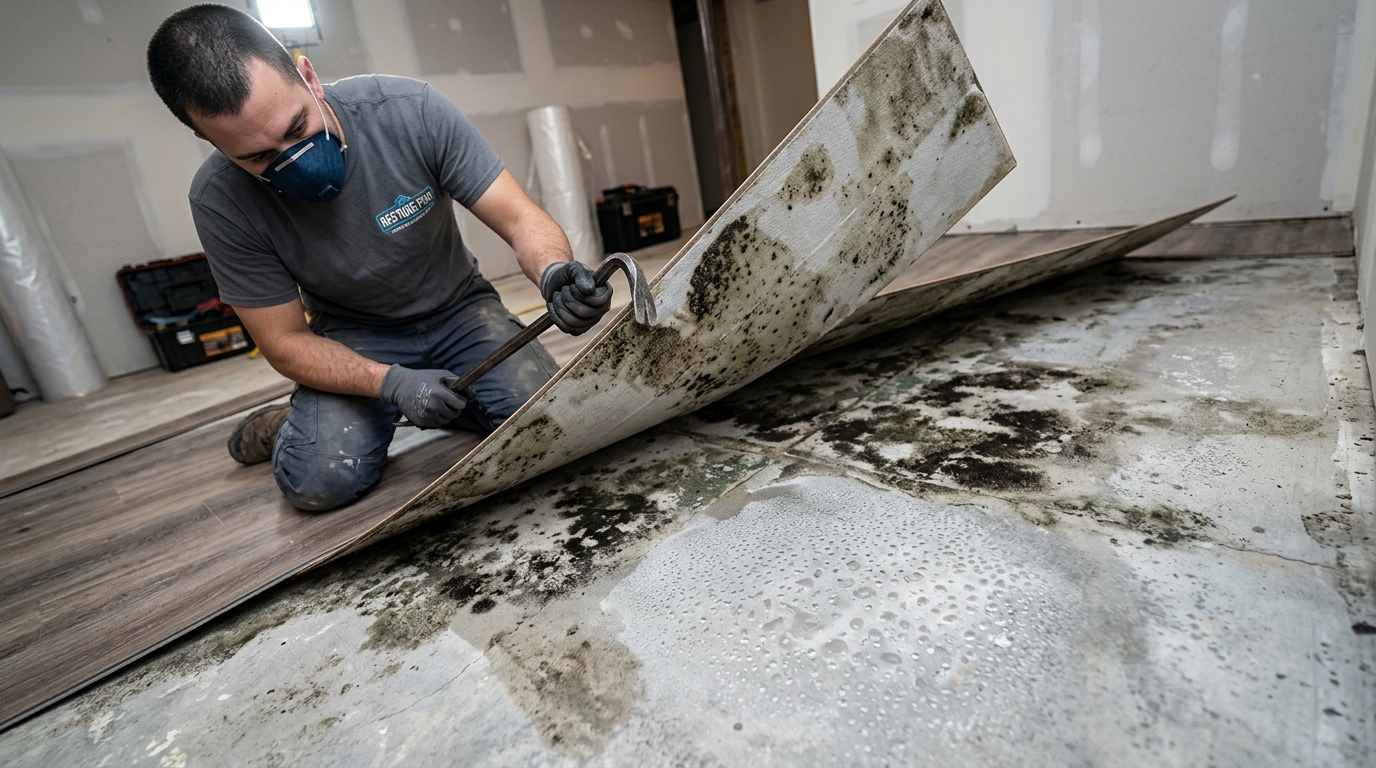
Primary Causes of Subterranean Slab Foundation Leaks
Plumbing supply lines installed beneath monolithic concrete slab foundations face constant subterranean physical and chemical stressors. Over time, shifting soil mechanics and water chemistry compromise metal pipe integrity, generating concealed high-pressure leaks.
Expansive Clay Soil Settling & Foundation Movement
Expansive clay soils such as Vertisols expand dramatically when saturated and shrink into deep fissures during summer droughts. This cyclical foundation heave and subsidence places intense shear stress on buried copper pipes, bending and snapping soldered plumbing joints.
Foundation soil movement causes severe subterranean pipe fractures. Unchecked slab leaks saturate surrounding soil, triggering localized foundation settlement.
Electrochemical Corrosion & Pinhole Pitting
Buried copper plumbing lines interact electrochemically with acidic soil minerals and harsh concrete chemicals. This corrosive galvanic reaction creates microscopic pinhole leaks along copper pipe walls that release continuous pressurized water streams beneath foundation slabs.
Water chemistry with low pH accelerates internal pipe pitting. Pinhole leaks often run undetected for months before surface floor symptoms appear.
Common Symptoms Warning of Concealed Slab Leaks
Because subterranean plumbing lines are encased in solid concrete and soil, property owners must rely on subtle structural, thermal, and auditory warning signs to identify concealed slab leaks before catastrophic foundation damage occurs.
Warm Floor Spots & Sudden Water Utility Spikes
Pressurized hot water leaking beneath concrete slabs conducts heat upward into finished flooring, creating distinctly warm spots on tile, vinyl, or carpet surfaces. Unexplained surges in monthly municipal water bills provide clear confirmation of continuous underground water loss.
Check your municipal water meter when all home faucets are off. If the meter flow indicator dial spins continuously, a subterranean plumbing leak is present.
Floor Tile Cracking, Cupped Wood & Baseboard Moisture
Water pooling beneath concrete slabs wicks upward through porous concrete via capillary action, dissolving adhesive glues and loosening ceramic tiles. Finished hardwood planks cup along plank edges, while interior baseboards blister and cultivate musty fungal odors.
Ignoring wet baseboards allows water to wick into interior drywall studs. Non-invasive moisture meters isolate the perimeter of slab water migration.
Non-Destructive Acoustic & Thermal Leak Detection
Locating subterranean plumbing ruptures without tearing up extensive concrete flooring requires advanced non-destructive diagnostic technology. Certified specialists deploy electro-acoustic listening instruments and infrared cameras to pinpoint leak coordinates.
Electro-Acoustic Ground Microphones & Correlators
Specialists deploy sensitive acoustic listening discs and digital sound correlators to amplify the high-frequency hissing sounds created by pressurized water escaping pipe orifices. Technicians map leak coordinates to within a few inches through solid concrete slabs.
Acoustic detection eliminates blind exploratory jackhammering through finished floors. Homeowners avoid destructive demolition across unaffected rooms.
Forward-Looking Infrared (FLIR) Thermography
Thermal imaging cameras detect surface temperature anomalies produced as hot or cold water plumes expand beneath foundation slabs. Technicians capture high-resolution thermal scans displaying the precise underground pathway of leaking plumbing supply lines.
Infrared scans provide verified documentation for insurance claims adjusters. Pinpoint leak detection accelerates physical plumbing repair timelines.
Slab Leak Repair Methods: Direct Jackhammer vs Overhead PEX Reroute
Once a subterranean slab leak is pinpointed, homeowners and plumbing specialists evaluate repair options based on pipe condition, flooring materials, and budget. Direct concrete penetration and overhead plumbing rerouting represent the two primary repair strategies.
Direct Concrete Slab Jackhammer Penetration
Direct repair involves jackhammering a small opening through the concrete slab directly above the leak coordinates to expose the damaged copper section. Technicians cut out the corroded pipe and braze a new seamless copper coupling before patching the concrete foundation.
Direct penetration makes sense when leaks occur under easily replaceable tile or carpet. However, older copper plumbing may develop future leaks elsewhere.
Overhead PEX Plumbing Rerouting via Attics
When buried copper lines show widespread pitting corrosion, the safest permanent solution is abandoning subterranean pipes entirely. Specialists route new flexible PEX tubing through attic spaces and interior wall cavities, bypassing the concrete slab completely.
Overhead PEX reroutes eliminate future slab leak risks permanently. PEX tubing resists chemical corrosion and expands safely during minor temperature drops.
Frequently Asked Questions: What Causes Water Leaks Under a Concrete Slab Foundation?
Review authoritative answers to common homeowner questions regarding restoration timelines, equipment operation, and insurance documentation.
The most common causes of slab leaks are shifting foundation soils, chemical and galvanic corrosion of copper pipes cont...
The most common causes of slab leaks are shifting foundation soils, chemical and galvanic corrosion of copper pipes contacting concrete, and high water pressure creating friction against underground gravel.
Key signs include warm spots on floors, unexplained increases in water bills, spinning water meter dials when taps are o...
Key signs include warm spots on floors, unexplained increases in water bills, spinning water meter dials when taps are off, sound of running water in walls, and cupped hardwood flooring.
Most policies cover the cost of tearing out and replacing concrete to access the leak and secondary water damage restora...
Most policies cover the cost of tearing out and replacing concrete to access the leak and secondary water damage restoration, but the plumbing pipe repair itself is typically excluded.
Yes, especially in older homes where copper pipes are deteriorating. An overhead PEX reroute abandons corroded pipes ent...
Yes, especially in older homes where copper pipes are deteriorating. An overhead PEX reroute abandons corroded pipes entirely, eliminating future slab leak risks permanently.
Call our 24/7 emergency referral hotline now to check on-call restoration capacity in your local municipal area.
📞 CALL (855) 716-3231