How Long Does Structural Drying Take After an Indoor Flood?
Structural drying takes between three and five days for standard residential building assemblies under IICRC S500 psychrometric drying protocols. Trapped moisture within dense concrete foundations, plaster walls, or subflooring may require five to seven days verified by daily pin moisture meter inspections.
Our field restoration engineering network answers critical questions regarding emergency structural drying, insurance claim line items, and IICRC S500 procedural standards to assist homeowners facing indoor water crises.
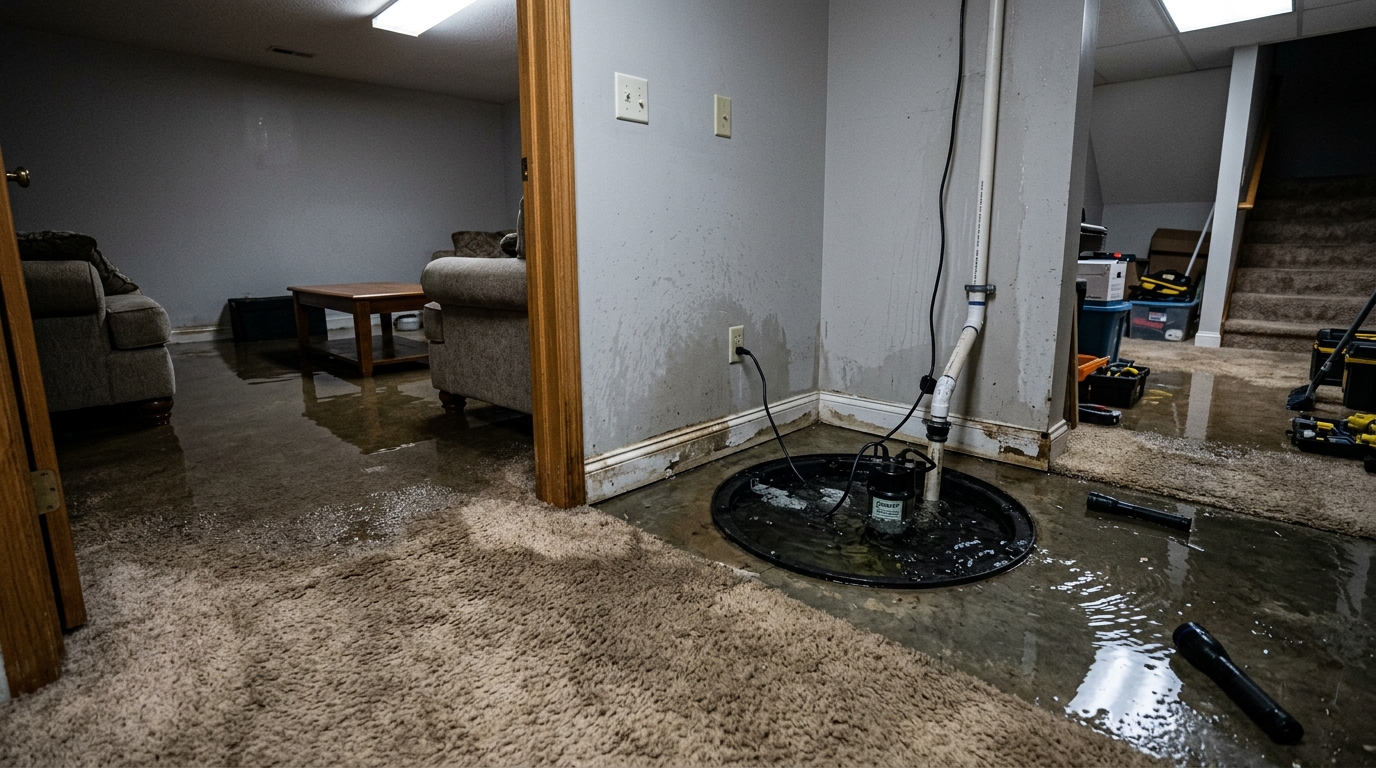
Standard Structural Psychrometric Drying Timelines
Standard Structural Psychrometric Drying Timelines: professional water damage restoration does not end when standing water is vacuumed from finished floors.
Professional water damage restoration does not end when standing water is vacuumed from finished floors. Structural drying requires continuous mechanical manipulation of vapor pressure to draw deeply bound water out of framing lumber, subfloor plywood, and concrete slabs.
The 72-Hour Rapid Stabilization Phase
The initial three days of structural drying represent the critical stabilization window where commercial LGR dehumidifiers and high-velocity air movers extract the vast majority of evaporated water. Lowering ambient relative humidity below forty percent prevents secondary mold amplification.
Technicians record daily moisture percentages across affected materials. If drying equipment is shut off prematurely, trapped moisture rebounds rapidly.
Variables Extending Drying Beyond Five Days
Dense construction materials including multi-layered subflooring, hardwood flooring, plaster walls, and thick concrete foundation slabs require extended drying times. Water migrating beneath concrete footings creates long-term vapor reservoirs that take five to seven days to dry.
Specialized injectidry floor mats accelerate dense hardwood drying. Daily thermal scans verify that subfloor moisture decreases steadily.
Why Commercial Equipment Must Run Continuously 24/7
Why Commercial Equipment Must Run Continuously 24/7: property owners frequently wonder whether loud drying machinery can be deactivated overnight.
Property owners frequently wonder whether loud drying machinery can be deactivated overnight. Turning off commercial dehumidifiers or axial air movers disrupts the established vapor pressure differential and causes indoor humidity to spike instantly.
Preventing Ambient Relative Humidity Rebounds
Preventing Ambient Relative Humidity Rebounds: when drying equipment is powered down, bound moisture remaining inside framing studs evaporates into room air without being condensed.
When drying equipment is powered down, bound moisture remaining inside framing studs evaporates into room air without being condensed. Ambient relative humidity rapidly rebounds above sixty-five percent, creating ideal warm microclimates for toxic mold spores to colonize drywall within hours.
Continuous twenty-four-hour equipment operation maintains a constant vapor pressure gradient. Uninterrupted drying shortens total restoration project duration.
Automatic Condensate Drainage & Thermal Protection
Automatic Condensate Drainage & Thermal Protection: commercial LGR dehumidifiers feature internal purge pumps that discharge extracted water through flexible tubing directly into plumbing fixtures.
Commercial LGR dehumidifiers feature internal purge pumps that discharge extracted water through flexible tubing directly into plumbing fixtures. Built-in thermal overload switches protect compressor motors from overheating during continuous multi-day operation.
Technicians inspect equipment daily to verify clear drainage lines. Homeowners do not need to empty water reservoirs manually.
How Contractors Verify That Building Assemblies Are Dry
How Contractors Verify That Building Assemblies Are Dry: structural drying is never declared complete based on visual appearance or surface touch.
Structural drying is never declared complete based on visual appearance or surface touch. Independent restoration contractors utilize electronic testing instruments to confirm that structural moisture content matches documented baseline reference standards.
Calibrated Electrical Resistance Pin Meters
Technicians insert insulated electrode pins into structural wall studs, bottom plates, and subfloor plywood to measure electrical resistance. Calibrated meters convert resistance into exact moisture percentages compared against dry baseline wood.
Wood framing lumber must achieve moisture content below sixteen percent before drying is complete. Readings above sixteen percent support active fungal colonization.
FLIR Thermal Imaging & Non-Invasive Scanners
FLIR Thermal Imaging & Non-Invasive Scanners: infrared thermography visualizes evaporative cooling patterns across finished drywall ceilings and tiled surfaces.
Infrared thermography visualizes evaporative cooling patterns across finished drywall ceilings and tiled surfaces. Non-invasive radio frequency scanners verify sub-surface moisture levels without puncturing decorative ceramic tiles or historic hardwood planks.
Technicians document thermal images on completion certificates. Certified records provide conclusive proof of structural dryness for insurance adjusters.
Risks of Premature Equipment Removal & Trapped Moisture
Removing restoration equipment before building materials achieve certified dry equilibrium leaves trapped moisture pockets sealed inside wall cavities. Trapped moisture leads to progressive structural rot, buckled floorboards, and hidden toxic mold outbreaks.
Hardwood Floor Warping & Crown Deformations
Solid hardwood floor planks absorb trapped subfloor moisture unevenly, causing plank edges to cup upward or center cores to crown permanently. Allowing equipment to run until subfloors achieve dry standards preserves hardwood flooring without replacement.
Premature equipment shutdown locks moisture into subflooring. Hardwood planks become irreversibly deformed, requiring expensive flooring replacement.
Concealed Wall Cavity Mold Colonization
Wet insulation and damp framing lumber sealed behind intact drywall provide dark, warm, and humid environments where mold colonies thrive undetected. Airborne fungal spores eventually penetrate living spaces, triggering respiratory distress for household occupants.
Proper structural drying eliminates moisture before mold can colonize. Independent restoration contractors protect property value and family health.
After a flood, drying time is measured in readings, not in a single promised week
Floodwater is usually dirty, and porous finishes often come out before drying starts, which is already a different calendar from a clean indoor spill.
What remains, including masonry and framing, is then dried with professional equipment until moisture readings stabilize against a dry reference. How long that takes depends on how long the water sat, what is left to dry, and the weather. We will not invent a number of days. How structural drying works explains the machines.
EPA's 24-48 hour window is a mold-prevention goal that many floods miss. That is a reason to start as soon as the house can be entered safely, not a reason to declare a flood job 'late' and skip drying. FloodSmart's coverage statements still apply: most homeowners insurance does not cover flood damage. flood-damage restoration is the service page. Call (855) 716-3231 and give the ZIP of the house that is wet. Ask whether the contractor works to IICRC S500. This referral network is not IICRC-certified as a firm. Related: structural drying and dehumidification and moisture mapping.
What lengthens a flood dry-down, in plain terms
What lengthens a flood dry-down, in plain terms, is thick masonry, wet silt in cavities, high outdoor humidity, a delayed extraction, and finishes left in place that should have come out.
Thick masonry, wet silt in cavities, high outdoor humidity, a delayed extraction, and finishes that were left in place when they should have come out all lengthen drying. A prompt extraction, a honest removal of unsalvageable materials, and a closed drying chamber with sized equipment shorten it, without a number we will invent. Ask for readings. When you call (855) 716-3231, give the ZIP for the wet house. Related: flood-damage restoration and how drying works.
Living elsewhere during a flood dry-down
Living elsewhere during a flood dry-down: a flooded house is often not a comfortable or a safe place to sleep while equipment runs and finishes are out.
A flooded house is often not a comfortable or a safe place to sleep while equipment runs and finishes are out. Ask the contractor, and ask your insurer about additional living expenses if you have that coverage. We do not decide livability from this page. The intake number is (855) 716-3231; give the ZIP of the wet house. Related: overall timing.
Regulatory Sources & Technical References
Remediation timelines, moisture safety thresholds, and insurance recovery guidelines cited across this guide reference official federal agency publications and ANSI-accredited restoration standards.
"A Brief Guide to Mold, Moisture and Your Home" - Documents the critical 24 to 48-hour structural drying window to prevent microbial amplification, safe residential cleanup thresholds for areas under 10 square feet, and cautions against routine bleach usage without source moisture elimination.
View Official EPA Guidance →"Mold Cleanup in Your Home" - Comprehensive federal protocols covering personal protective equipment, containment barriers, and building material remediation procedures.
View EPA Mold Cleanup Protocols →Defines statutory boundaries between standard private homeowners policies and federal flood coverage, outlining structural building coverage, contents protection, and sewer backup riders directly caused by overland flooding.
Visit FloodSmart.gov →"Standard for Professional Water Damage Restoration" - The recognized technical reference defining Category 1 (clean), Category 2 (gray), and Category 3 (black) water classifications, psychrometric drying formulas, and structural moisture verification metrics.
This referral network operates as an independent matching service and holds no corporate IICRC certifications. Property owners should verify current individual technician certifications directly with dispatch contractors.
Frequently Asked Questions: How Long Does Structural Drying Take After an Indoor Flood?
Review authoritative answers to common homeowner questions regarding restoration timelines, equipment operation, and insurance documentation.
Under standard IICRC S500 psychrometric drying protocols, standard drywall and framing lumber take 3 to 5 days to dry. D...
Under standard IICRC S500 psychrometric drying protocols, standard drywall and framing lumber take 3 to 5 days to dry. Dense materials like concrete or hardwood may take 5 to 7 days.
No. Drying equipment must run continuously 24 hours a day. Turning off equipment allows relative humidity to rebound, wh...
No. Drying equipment must run continuously 24 hours a day. Turning off equipment allows relative humidity to rebound, which prolongs drying times and risks toxic mold growth.
Technicians measure moisture levels daily using calibrated pin meters and infrared cameras, comparing readings against u...
Technicians measure moisture levels daily using calibrated pin meters and infrared cameras, comparing readings against unaffected baseline materials until dry standards are achieved.
Incompletely dried homes suffer hidden wall cavity mold outbreaks, buckled hardwood floors, rotting framing studs, and p...
Incompletely dried homes suffer hidden wall cavity mold outbreaks, buckled hardwood floors, rotting framing studs, and peeling paint, leading to thousands in secondary repair bills.
Call our 24/7 emergency referral hotline now to check on-call restoration capacity in your local municipal area.
📞 CALL (855) 716-3231