24/7 Emergency Water Damage Restoration for Homes
Emergency water damage restoration is the after-hours residential response that stops active leaking, removes standing water, and begins structural drying before clean water becomes a contamination and mold problem. Water Damage Repair Emergency is a referral network. We connect homeowners with independent licensed contractors. We do not own a restoration fleet, and we cannot promise a specific arrival time.
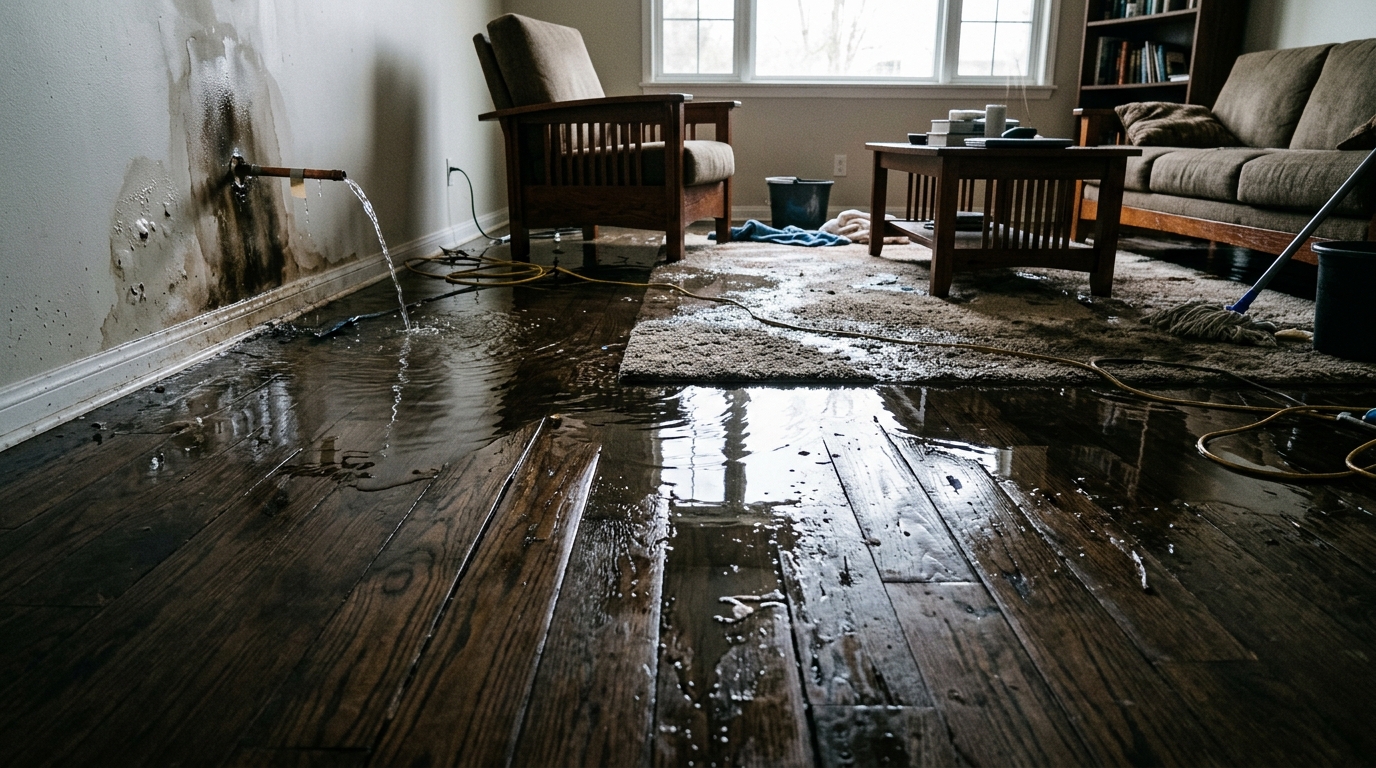
What emergency water damage restoration actually includes
Emergency restoration is a sequence, not a single machine. The first hours focus on source control, safety, and water removal. Drying and repairs follow once moisture readings show the structure can be saved.
When a supply line bursts at night or a fixture overflows while you are away, the clock that matters is the moisture clock. Standing water migrates into base plates, insulation, and subfloors by capillary action. Under the IICRC S500 Standard for Professional Water Damage Restoration, technicians classify the water (Category 1, 2, or 3), inspect affected assemblies, and choose extraction and drying methods that match that category.
A typical emergency visit, when a contractor is available, includes stopping the water source if it is still running, making the electrical environment safer, extracting standing water, placing air movers and dehumidifiers, and writing a moisture map that insurance can use. Water extraction is the removal step. Water damage mitigation is the broader effort to prevent further harm. Restoration is the work that returns the home toward a pre-loss condition after those first controls are in place.
Source control and safety come first
No extraction plan is useful if water is still entering the structure or if electrical circuits sit in standing water.
Contractors commonly ask you to shut the main water valve and, if you can do so safely, the breaker for affected rooms. They should not ask you to wade into water to reach a panel. If the water may be sewage or floodwater, treat it as Category 3 until proven otherwise and keep children and pets out.
Category drives every later decision
Clean supply-line water, appliance grey water, and sewage or outdoor floodwater are not handled the same way.
Category 1 water can often allow more finishes to be saved if extraction starts quickly. Category 2 and 3 water usually require removal of wet porous materials and stricter protective equipment. Leaving Category 1 water sitting for more than a day can raise its category as microorganisms grow.
Drying starts only after free water is gone
Dehumidifiers cannot replace pumps. They remove vapor after liquid water has been extracted.
Once floors no longer hold puddles, contractors set a drying chamber: sealed rooms, air movers to break the boundary layer on wet surfaces, and dehumidifiers sized to the job. Daily moisture readings decide when equipment comes out. That measured dry-down is what prevents a second, quieter loss inside the walls.
When to call, and what a referral network can and cannot do
Call when water is still moving, when a room is standing in water, or when you smell sewage. A referral network is a dispatch and matching service, not the contractor who will be in your home.
Good reasons to use 24/7 intake include a burst pipe, a flooded finished basement, a sewage backup, a sudden roof leak over living space, or a water heater that has emptied its tank into a closet or hallway. If the loss is a slow stain on a ceiling and the leak is already stopped, you may still need a contractor, but the work may be scheduled rather than treated as an active emergency.
Water Damage Repair Emergency takes your ZIP code, checks participating residential contractors, and connects the call. The contractor sets fees, decides whether they can take the job, and explains what they can do on site. We do not warrant their licensing. You should ask to see license, insurance, and IICRC training documents before authorizing demolition.
Insurance, documentation, and the first 24 hours
Most homeowners policies want you to prevent further damage, then document what you did. Emergency work is often mitigation, which is reviewed separately from rebuild.
Photograph rooms before anyone moves contents. Keep a simple log of when the leak started, when the water was shut off, and who entered the house. If you hire a contractor, ask for a written scope and moisture readings, not only an oral estimate.
Coverage still depends on the cause. A sudden pipe burst is often reviewed differently from long-term seepage or a flood, which may need a separate flood policy. Educational cost ranges for extraction and drying are benchmarks, not a quote from this network.
Frequently Asked Questions
Practical answers about emergency water damage restoration for homeowners, including what a referral network can promise and what it cannot.
No. Extraction is the step that removes standing water. Emergency restoration is the full first-response sequence: stop the source, classify the water, extract, begin drying, and protect unaffected rooms.
No. We are a referral network. Arrival depends on which independent contractors participate in your ZIP code, how busy they are, weather, and the type of loss. The intake line is staffed 24/7 so you can check current availability.
You can pick up clean standing water and move furniture if it is safe. Household box fans are not a substitute for extraction and dehumidification in a wet wall or subfloor. If the water might be sewage or outdoor floodwater, leave it for a contractor with the right protective equipment.
Usually not. Emergency work is about stopping the loss and starting a measured dry-down. Rebuild, paint, and floor replacement come after materials reach a documented dry standard. Closing walls while they are still wet is a common cause of hidden mold.